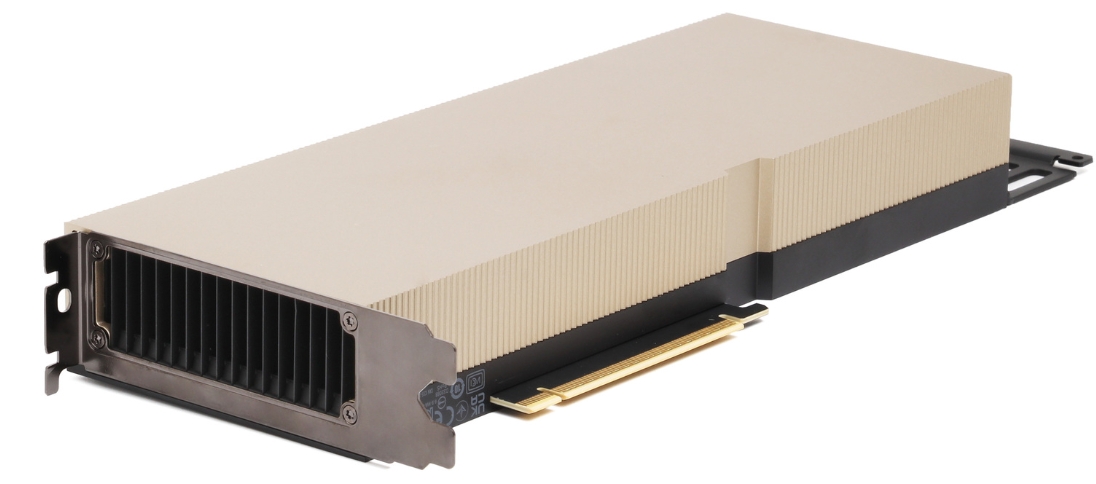
NVIDIA AI H100 GPU
Description
* NVIDIA H100 GPU –
* Category * Specification *
*——————————————————————–*
* GPU Architecture * Hopper (GH100) *
* Process Node * TSMC 4N (custom 4nm) *
* CUDA Cores * 14,592 (FP32) *
* Tensor Cores * 456 (4th Gen) *
* RT Cores * None (focused on AI/HPC, not graphics) *
* FP64 Performance * 60 TFLOPS *
* FP32 Performance * 60 TFLOPS *
* TF32 Performance * 1,000 TFLOPS (Tensor Core-accelerated) *
* FP8 Performance * 2,000 TFLOPS (with Hopper FP8 Transformer Engine) *
* Memory (VRAM) * 80GB HBM3 or 94GB HBM3 (H100 NVL) *
* Memory Bandwidth * 3 TB/s (HBM3) *
* NVLink Bandwidth * 900 GB/s (4th Gen NVLink) *
* PCIe Support * PCIe 5.0 x16 *
* TDP (Power) * 700W (SXM5) / 350W (PCIe) *
* Form Factors * SXM5 (DGX/HGX) / PCIe 5.0 (workstations) *
* Multi-GPU Scaling * NVLink & NVSwitch for DGX H100 SuperPODs *
—
* Key Innovations
1. Hopper FP8 Transformer Engine
– Doubles AI training/inference speed for LLMs (vs. A100 FP16).
– Automatic FP8/FP16 conversion for models like GPT-4.
- HBM3 Memory
– 3 TB/s bandwidth (2x A100) for data-intensive workloads. - Dynamic Programming (DPX)
– Accelerates algorithms (e.g., genomics, robotics pathfinding). - Confidential Computing
– Hardware-based encryption for secure AI in the cloud. - MIG (Multi-Instance GPU)
– Partition into 7x isolated GPUs (e.g., 7x 10GB instances).
—
* Performance vs. A100
– 6x faster AI training (FP8 Transformer Engine).
– 3x faster HPC (FP64).
– 2x memory bandwidth (HBM3 vs. HBM2e).
—
* Use Cases
✔ Large Language Models (LLMs) – GPT-4, ChatGPT-scale training
✔ Scientific Computing – Climate modeling, quantum simulation
✔ Edge AI – Real-time inference for autonomous systems
✔ Cloud AI – AWS/Azure H100 instances for generative AI
—
* H100 Variants
– H100 PCIe (350W) – For servers/workstations.
– H100 SXM5 (700W) – For DGX/HGX supercomputing.
– H100 NVL (94GB VRAM) – Dual-GPU card for massive LLMs.
The H100 is the engine behind modern AI breakthroughs , powering next-gen datacenters and supercomputers.
The A100 remains a workhorse for datacenters , powering everything from large language models to supercomputing clusters.
Reviews
There are no reviews yet.